Carbon Monoxide is a toxic gas, but, being colorless, odorless, tasteless, and initially non-irritating, it is very difficult for people to detect. It is formed by the incomplete combustion of fuels. Carbon monoxide is about the same weight as air; which allows it to diffuse throughout a building or house. At this time of year problems can occur from malfunctioning heating systems. The buildings we work and live in get closed up to prevent cold air from entering. This can cause a serious issue if a vehicle or other equipment is running in an enclosed space.
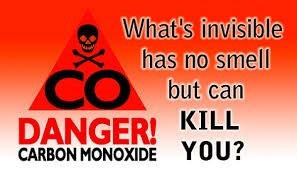
Common sources of CO in our homes are clothes dryers, water heaters, furnaces or boilers, fireplaces (gas and wood burning), gas stoves and ovens, wood stoves, generators, grills, power tools, lawn equipment and motor vehicles.
Every poison has a particular trait that causes it to be poisonous. In the case of carbon monoxide, the trait has to do with hemoglobin in the blood.
Hemoglobin is made up of complex proteins that bind to iron atoms. The structure of the protein and its iron atom causes oxygen to bind to the iron atom very loosely. When blood passes through the lungs, the iron atoms in the hemoglobin bind to oxygen atoms. When the blood flows into areas of the body that are lacking in oxygen, the iron atoms release their oxygen. The difference in oxygen pressure in the lungs and in the
parts of the body needing oxygen is very slight. The hemoglobin is very finely tuned to absorb and release oxygen at just the right times.
Carbon monoxide, on the other hand, binds very strongly to the iron in hemoglobin. Once carbon monoxide attaches, it is very difficult to release. So if you breathe in carbon monoxide, it sticks to your hemoglobin and
takes up all of the oxygen binding sites. Eventually, your blood loses all of its ability to transport oxygen, and you suffocate.
What does this mean for workers? If CO is present above a certain concentration, it will affect workers as follows:
- Slight headache and dizziness
- Nausea
- Drowsiness and an euphoric feeling
- Unconsciousness
- Death
The level of CO mandated by OSHA as the maximum allowable for 8 hours is 50 parts per million. This is an extremely small amount of CO. To put this into perspective, think of a room that holds 1 million ice cubes and then remove 50 cubes from the room. Those 50 ice cubes are the maximum amount allowed by OSHA for workers to be exposed to over an 8 hour period.
The short term (15 minutes) exposure limit is 200 parts per million. Immediately dangerous to life and health (IDLH) is 1200 parts per million. Acceptable residential levels are much lower than work levels.
What to do to prevent CO overexposure?
1. Leave the area immediately and report to the client or if at home call your local emergency number.
2. Purchase CO detectors for your house and use them along with smoke detectors.
3. Use monitors at site that require them and observe employees for signs of CO exposure.
We have Carbon Monoxide Monitors available for use on the job site when required (required at certain areas of steel mills and at times other clients). Plan ahead know when and where you will need them. Wear them
within 12” of your breathing zone. Do not have them in your pocket or under a layer of clothing.