The goal of the fifth annual Ladder Safety Month, which is sponsored by the American Ladder Institute, is to decrease the number of injuries and deaths caused by the misuse of ladders. With that goal in mind, the American Ladder Institute is offering a variety of training opportunities to help increase safety awareness and the proper choice and use of ladders. Ladder safety is important both on the job site and at home as each year approximately 500,000 people are injured, and 300 people die in ladder-related injuries. Training is available through the American Ladder Institute as well as the ability to earn a safety certificate after completing the training and a ladder safety test. You can access the free training here:
https://www.laddersafetytraining.org/
Did you know that a six-foot fall from a ladder can kill you?
When you fall off a ladder, you can land on almost anything, so internal injuries are common. More often, you might break an arm or leg. Falls from ladders occur when either you slip, or the ladder slips. Always use the proper ladder for its designed purpose in the proper manner and correct others using them wrong or inappropriately. Remember that even if you use ladders on a daily basis, you MUST exercise great caution and preparation before ascending. Always make sure a co-worker or another person knows you are on the ladder.
Most common misuse of step-ladders:
Standing or sitting on top of a ladder.
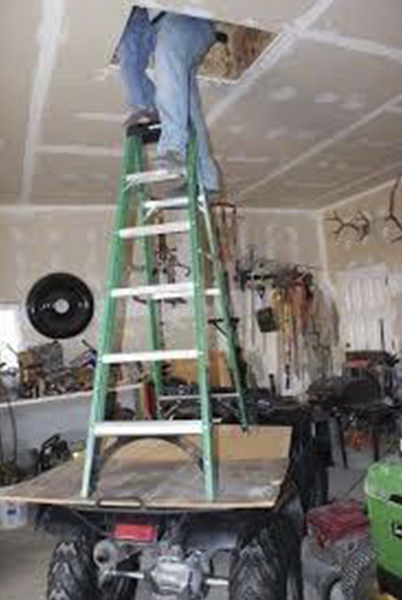
Leaning a step ladder against the wall instead of setting it up properly.
Stepping onto the back side of a step ladder.
IMPORTANT
Inspect your ladder BEFORE & AFTER each job to ensure it’s in good repair.
- All rungs are connected securely to the side rails.
- No rungs, side rails, or bottom feet are missing, loose, broken, cracked, or corroded.
- No nails, screws, or rivets are sheared off or missing.
- There are no splinters.
If you ever notice an unsafe ladder, report it immediately to your Middough Supervisor, Construction Manager or your client contact. Your employer or client contact should remove defective ladders from service and tag them. Do not use a damaged ladder.
Proper usage can prevent ladder slips:
- Place the ladder on a firm, level surface (that isn’t slippery).
- Use a ladder with slip-resistant safety feet --especially if you’re setting it on a smooth floor.
- Always secure a portable straight or extension ladder. Tie it off, or block it.
- Always lean the ladder against something secure. Do not set a ladder on top of boxes, trucks, or other movable objects.
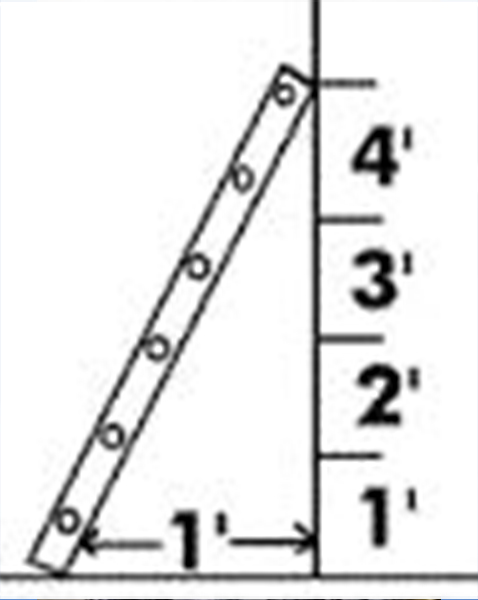
- Make certain your straight ladder is at the correct angle -not too steep; not too horizontal. Set it 1 foot out for every 4 feet of ladder length and extend the ladder 3 feet above the upper landing surface.
- Barricade a ladder if it’s in an area where it could get bumped. DO NOT use a ladder in front of a door that might open, unless there is a barricade or guard in place.