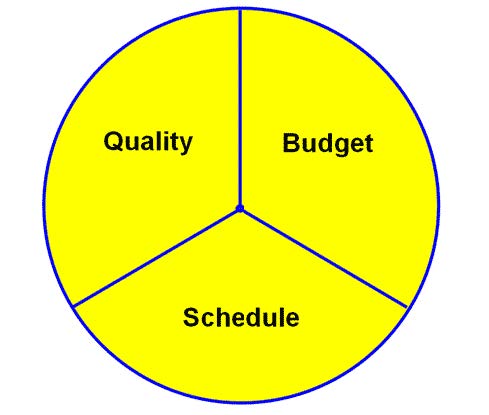
 There are three primary constraints in a project that are in competition with one another: Quality, Budget and Schedule. The ideal project finds a balance between all three. On a regular basis we are faced with projects and clients that will have priorities that may tip the balance of forces to one or even two of the three constraints. Think of Quality, Budget and Schedule as a three-legged stool, if one of the three is different than the other two the stool quickly comes out of balance.
What Creates Unbalance?
 Members of a project have a natural tendency to mainly focus on the constraint that is most important to their role in the project. The technical members of the staff may have their center of attention on the quality of the deliverables. The project manager may be more focused on budget especially if we had to reduce the estimated hours to win the project. The client may be more fixated on how quickly the schedule can be completed by looking downstream at what is the soonest they can achieve their return on investment.
Changes during a project that are aimed at one or two of the constraints will inevitably affect the remaining constraint. Unidentified scope creep can cause cascading negative effects on the three constraints. Performing out of scope work without compensation is one of the quickest ways to exceed the budget. Not identifying scope creep with the client jeopardizes the schedule with the additional time required to complete the tasks. Scope creep can come in the form of too many design iterations with the client. Trying to keep track of all the changes makes it difficult to maintain quality control.
How to Maintain Balance
Everyone is familiar with the quote, “Have you ever had to walk a mile in their shoes?” Simply put if every individual on a project gave equal consideration to Quality, Budget and Schedule, then everyone would have a better understanding of how important it is to maintain balance across the three constraints.
Quality must be maintained on all deliverables, but it must be accomplished with the right staff on the project with the correct level of effort in the details. Exceeding these could result in an overrun of the budget. Budgets must be established within the price the market can bear. Exceeding that price point may result in a proposal loss but reducing the estimate too low or using too high of a rate schedule may inadvertently put a constraint on the manhours allowed to develop quality deliverables. Schedule constraints typically come in the form of too little time available. This has the potential to cause the budgets to be overrun if additional staff is enlisted beyond the original plan to
complete the deliverables. Seldom is too long of a schedule a problem, but it can be an issue with budget if the original staff is not available to complete the task and a more expensive substitute must be used. It can also be an issue with quality if the project starts and stops over extended periods. Working intermittently on a project introduces the risk of quality control issues.
Balancing Quality, Budget and Schedule requires constant diligence from every team member at all levels to achieve a successful project.
We must be professional and recognize the importance of all three constraints.
We must take initiative and share with the rest of the team members when a constraint is creating unbalance.
We must honor our commitments to maintain Quality, Budget and Schedule over the life of a project.
We must continuously improve to find ways to understand and balance the importance of all three constraints.